

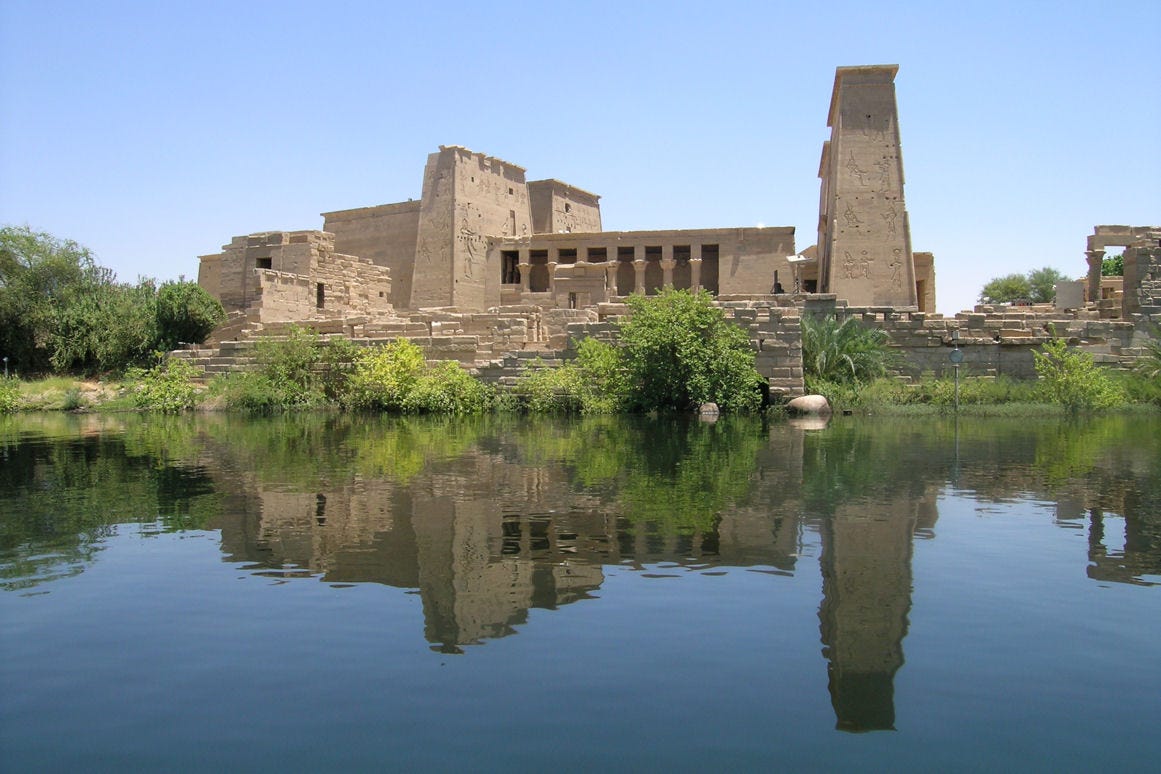
Last week we explored an early form of Egyptian writing that survives on an ivory plaque datable to about 2985 BCE. What we left out is the important question of how Egyptologists can read it. After all, the Kingdom of Egypt died with Cleopatra in 30 BCE and was subsumed into the expanding Roman Empire. After about 4,000 years of use, hieroglyphics slowly faded away in the first few centuries of the Common Era. In other words, no one has been recording history or communicating through the stylized pictures developed by the ancient Egyptians for a long time. The latest-known usage dates to 24 August 394 CE in an inscription on a wall in the Philae temple complex in southern Egypt, seen below.

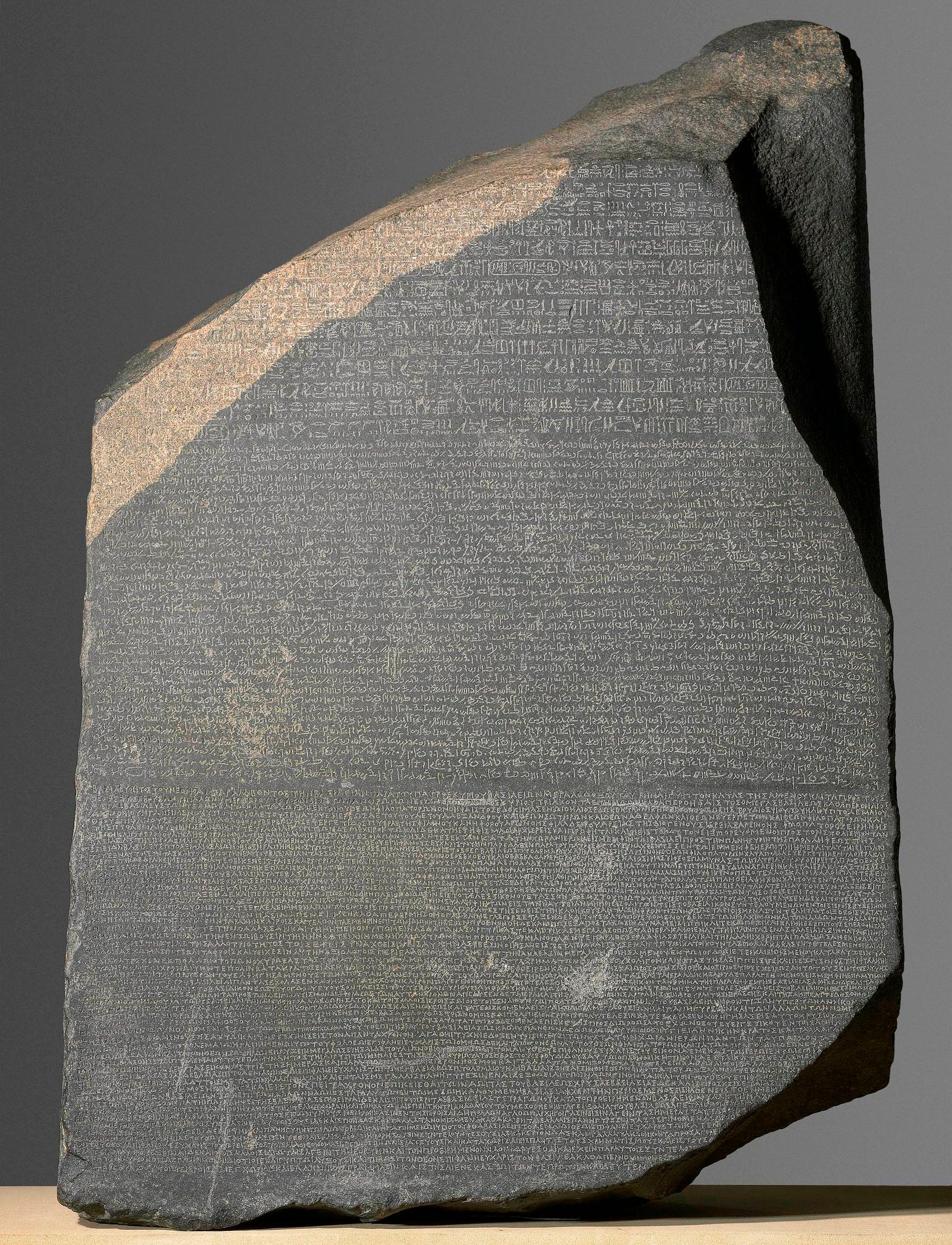
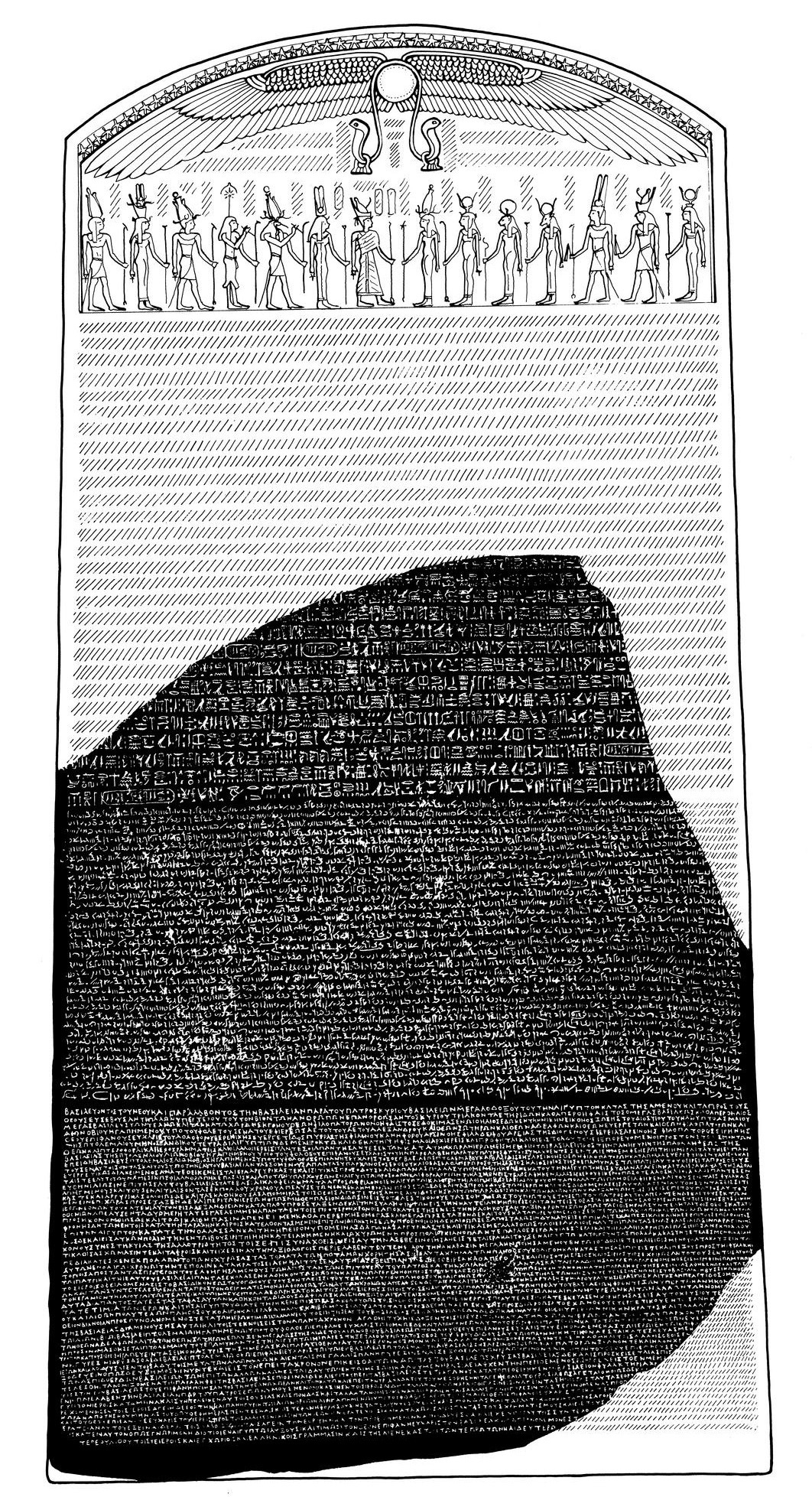
Just over 1,400 years later, in July 1799, a group of French soldiers stumbled upon an object that would change our understanding of the ancient world. While working at the port of Rashid (also known as Rosetta), they discovered a stone carved with three distinct types of script. Now known as the Rosetta Stone, this fragment of an ancient stela, similar to that erected by King Hammurabi more than a millennium earlier, unlocked the mysterious hieroglyphic script of ancient Egypt.
Though not a comic strip featuring Sphinxy, the lines inscribed on the fragmentary gray and pink stone concern Ptolemy V, king of Egypt from 204 to 180 BCE, when Egypt was fully under the influence of Greek culture following the conquest of Alexander the Great in 332 BCE. Three blocks of text in hieroglyphic, demotic, and Greek offered scholars the unprecedented opportunity to break the code.
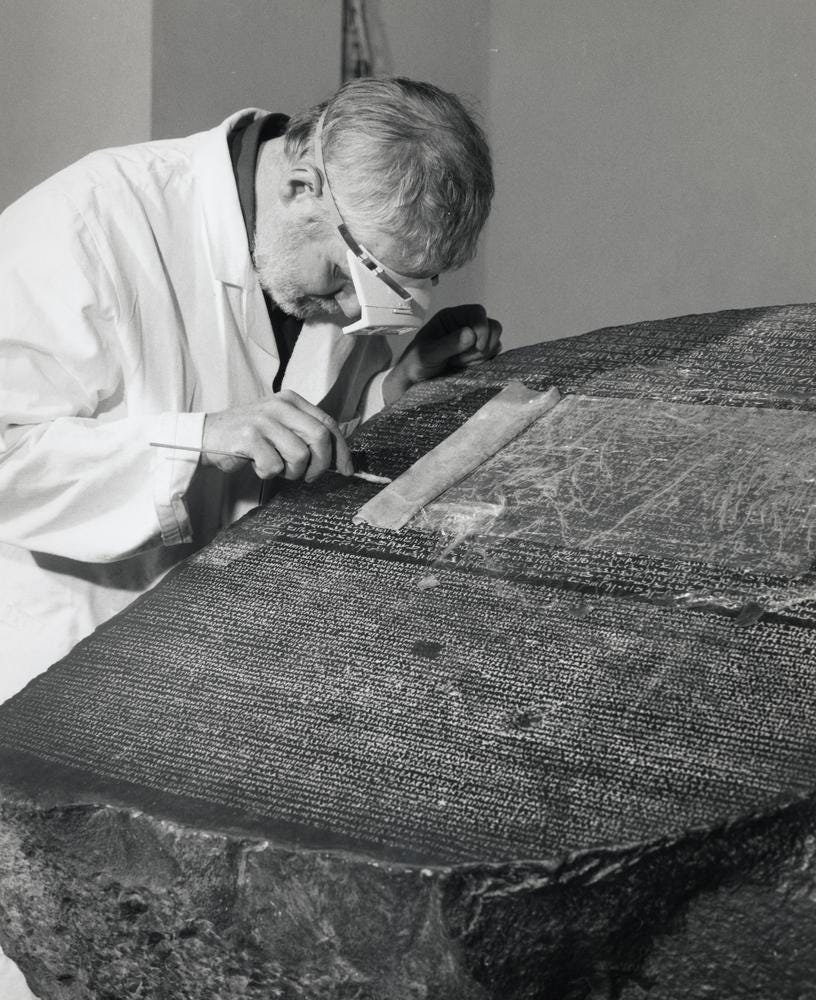
Prints and plaster casts of the stela were quickly made and disseminated across Europe. French scholar Jean-François Champollion began to make sense of how ancient Egyptians used animals, objects, and other symbols to record their language, history, and religious beliefs, and in September 1822 exclaimed to his brother, “Je tiens l’affaire, vois!” (Look, I’ve got it!). What he had were findings that were read to the public two weeks later, marking 27 September 1822 as the day of decipherment. Champollion’s work was published only 1836, four years after his death, a watershed for Egyptology.
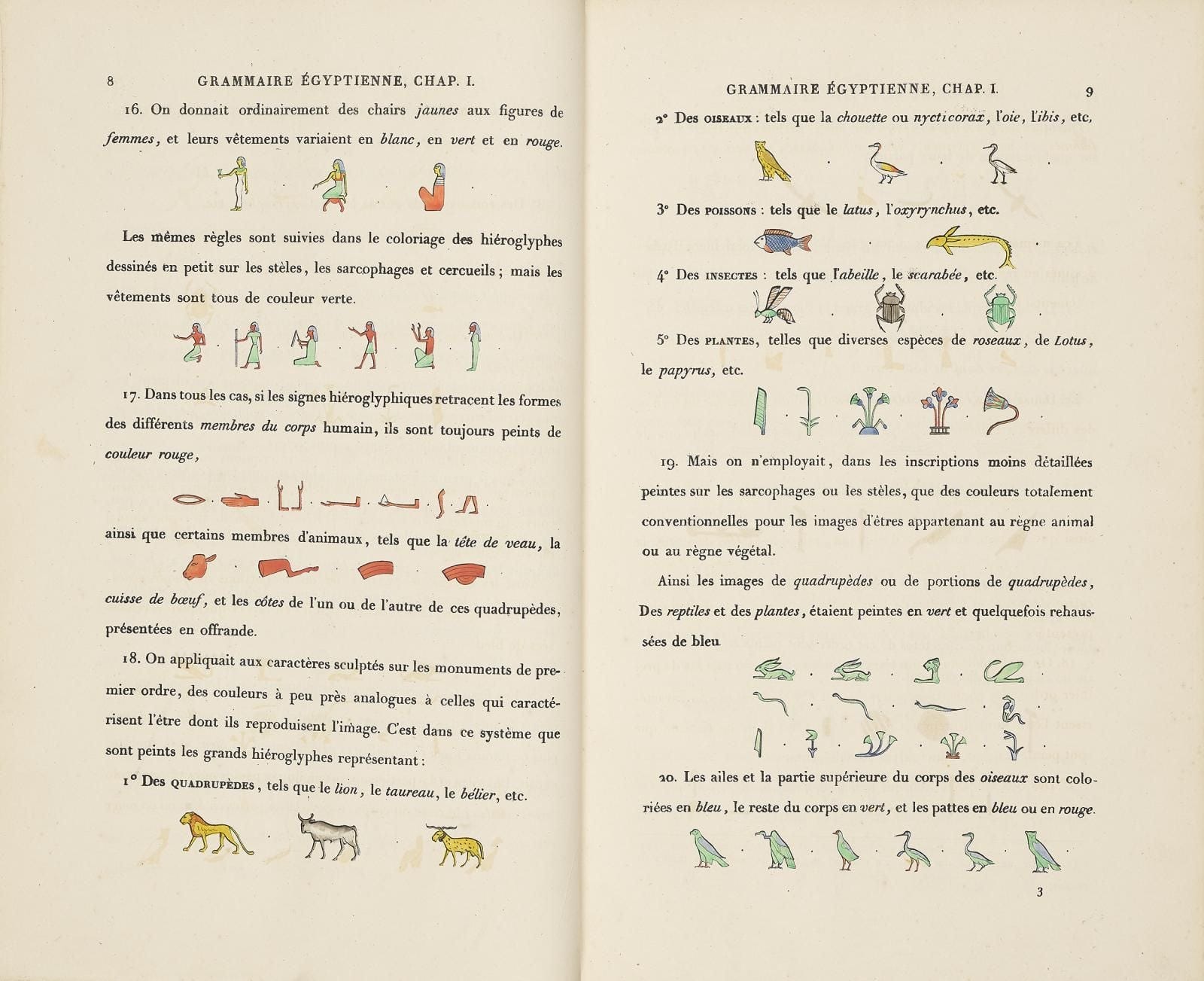
Our term hieroglyph is derived from the Greek hierogluphikos from hieros, meaning “sacred,” and gluphē, “carved.” Of course, hieroglyphs were carved and painted on numerous types of surfaces, and over time the use of brushes, reed pens, and ink on papyrus gave way to more abbreviated scripts known as hieratic — a writing system of abridged hieroglyphics used by priests — and demotic, a simplified cursive. These scripts eventually came to be replaced by Greek, and the Rosetta Stone stands as important evidence of this transition in writing systems with the same content carved in priestly hieroglyphs, quotidian demotic, and administrative Greek. Thanks to knowledge of ancient Greek, scholars were able, slowly, to uncover not just words and names, but the full grammar and syntax of the written hieroglyphic language. However, Egyptologists continue to gain deeper understanding through continued study and ongoing archaeology of this unique writing form.
With gratitude for your financial support, Paid Subscribers may continue on for more about why the Rosetta Stone exists and what it says. Free subscribers may upgrade to read more.