

While I likely do not, I feel like I remember the first time I saw this breathtaking sculpture in class. It would have been around October 1988. I definitely remember taking photos of it with my film camera in June 1992 on my first trip to Rome. Though now recognized as a Celtic trumpeter felled in battle, he is most frequently called “The Dying Gaul,” a modern name derived from the ancient Greco-Roman conception of foreigners.1 These ancient Europeans are now more accurately called “Celts,” a rubric that still masks the diversity of the multiple tribes put under it.2 To me, he will always be The Dying Gaul.
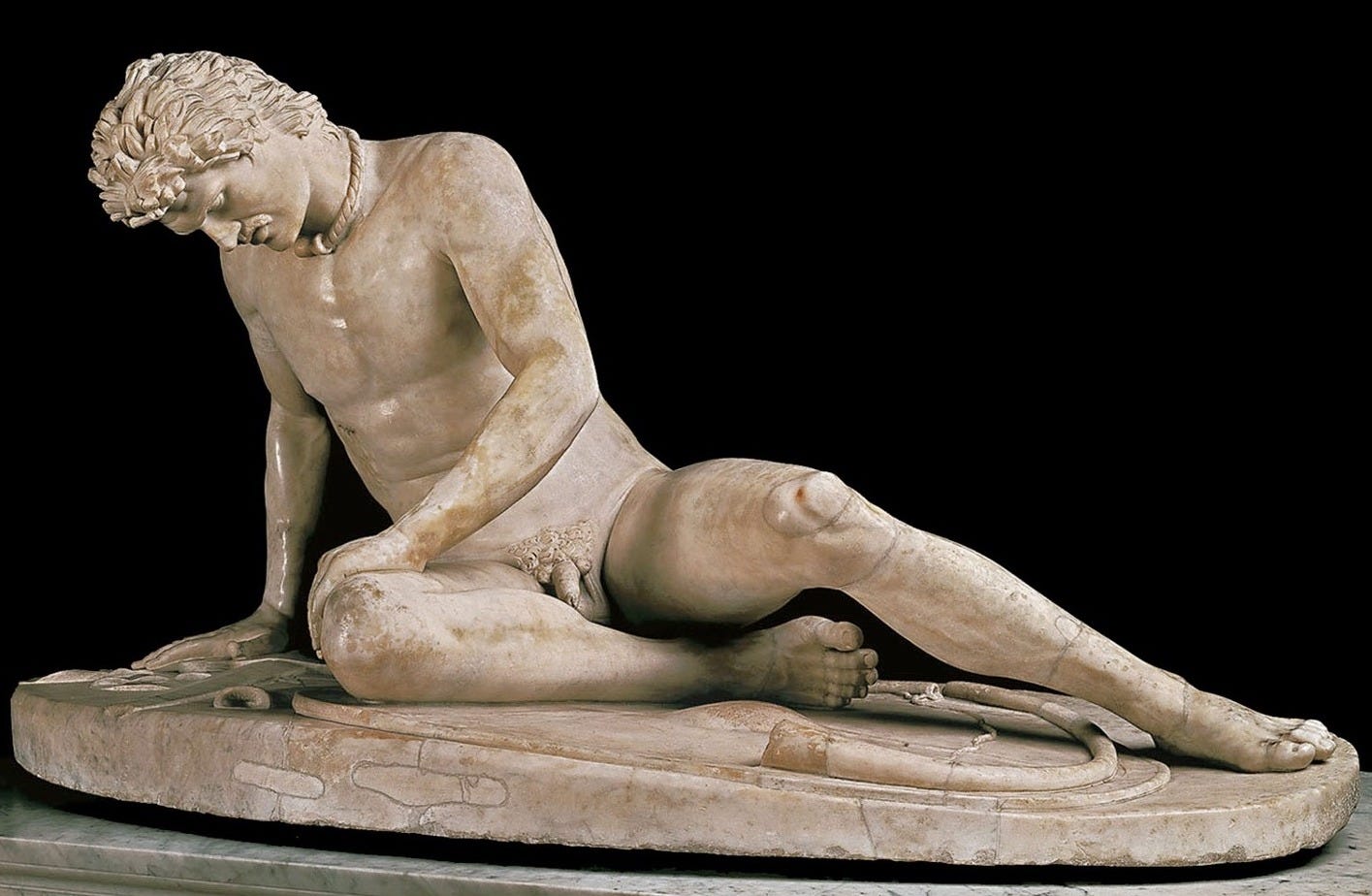
As with a lot of Greek sculpture, the original, cast in bronze around 220 BCE, is lost, its precious material melted down for another use. We know what the dying trumpeter looked like thanks to a Roman marble copy made almost two centuries later, a good example of Roman taste for Greek artworks regardless of their original context or meaning. Even with the less forgiving medium of hard stone rather than the fluid clay, wax, and molten bronze used by the original artist, possibly the late-third-century sculptor Epigonos, our anonymous Roman marble-carver has captured the pain and suffering of this fallen soldier with elegance. Even in defeat, he is not humiliated, an artistic choice that points to the Greek belief that a great victory can only come from defeating a great enemy.
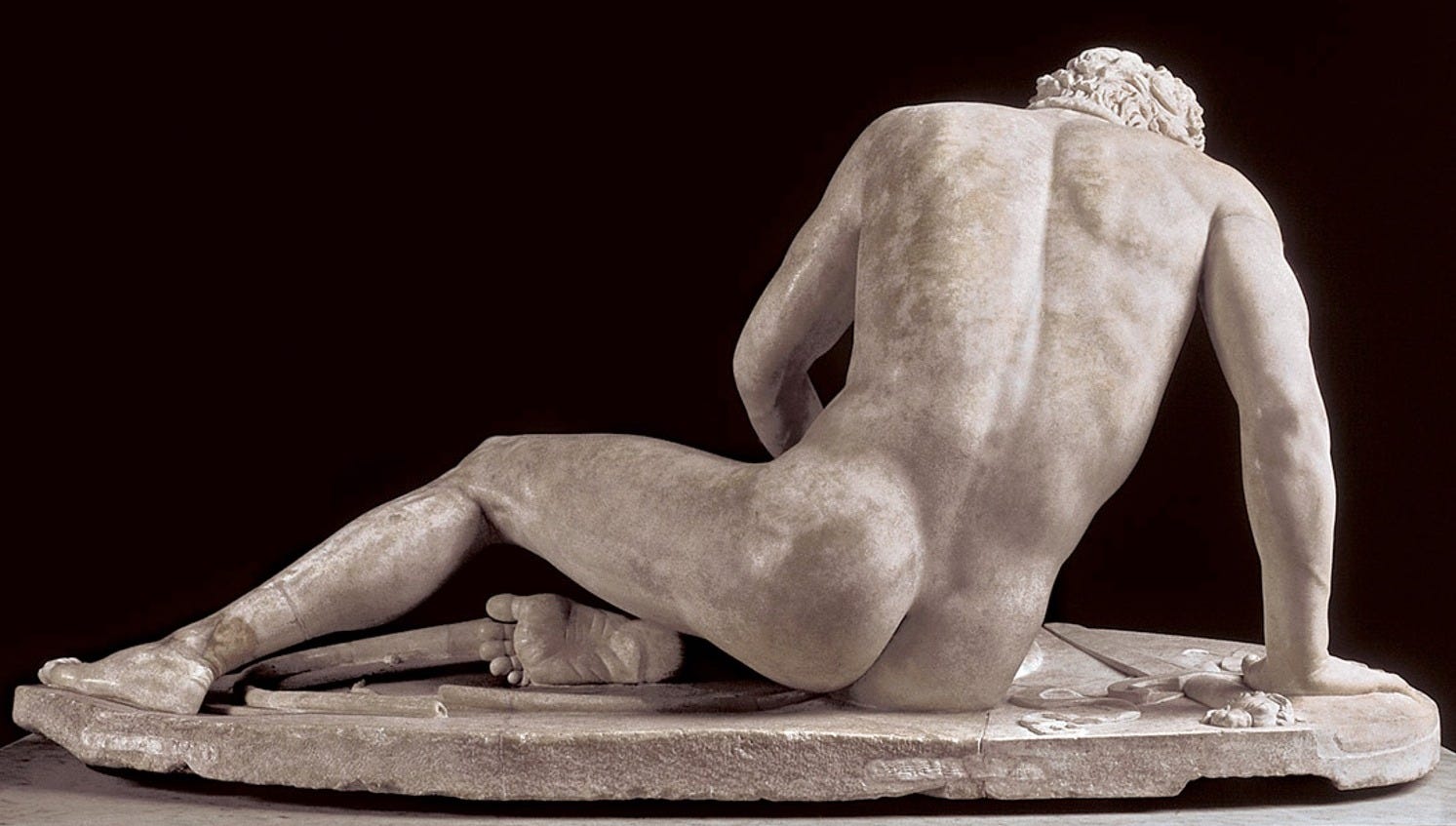
It is this dramatic intensity that makes the Dying Gaul such a good example of Hellenistic sculpture. The ideals of harmony and proportion perfected in the Classical period gave way to emotional works, whose figures were no longer self-contained on bare pedestals but interacted with the surrounding environment. Here, the dying man appears as a living, breathing, and intensely emotive person. His nudity likely follows the Greek tradition of depicting heroes without clothing, which allowed viewers to see the muscled, athletic bodies that enabled their success.
Here, however, the naked soldier is not victorious, nor is he a traditional hero.
Though he is now displayed alone at the Museo Capitolino in Rome, he was once part of a larger figure group that stood in the city of Pergamon. The city’s ruler, Attalos I,3 set up a number of votive monuments, both at home and in Athens, in thankful celebration of his triumph over Celtic tribes in the 230s BCE.
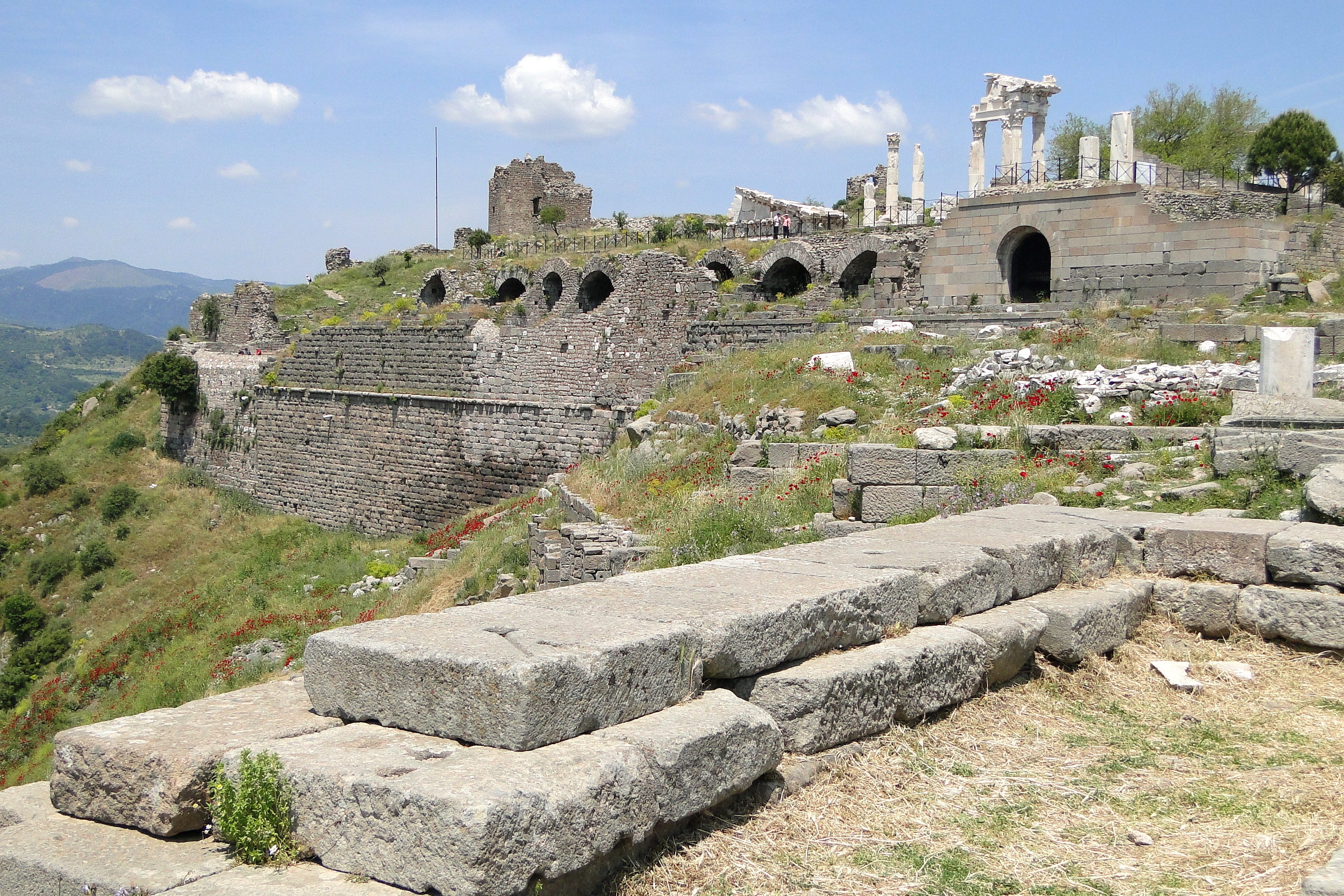
Our trumpeter was one of several fallen figures in the ensemble, and a likely reconstruction shows them surrounding a central duo depicting the murder-suicide of a Gallic soldier and his wife, a copy of which also survives in Rome.4 The original composition may have been set up on a high, round base with a dedicatory inscription that was discovered at Pergamon.
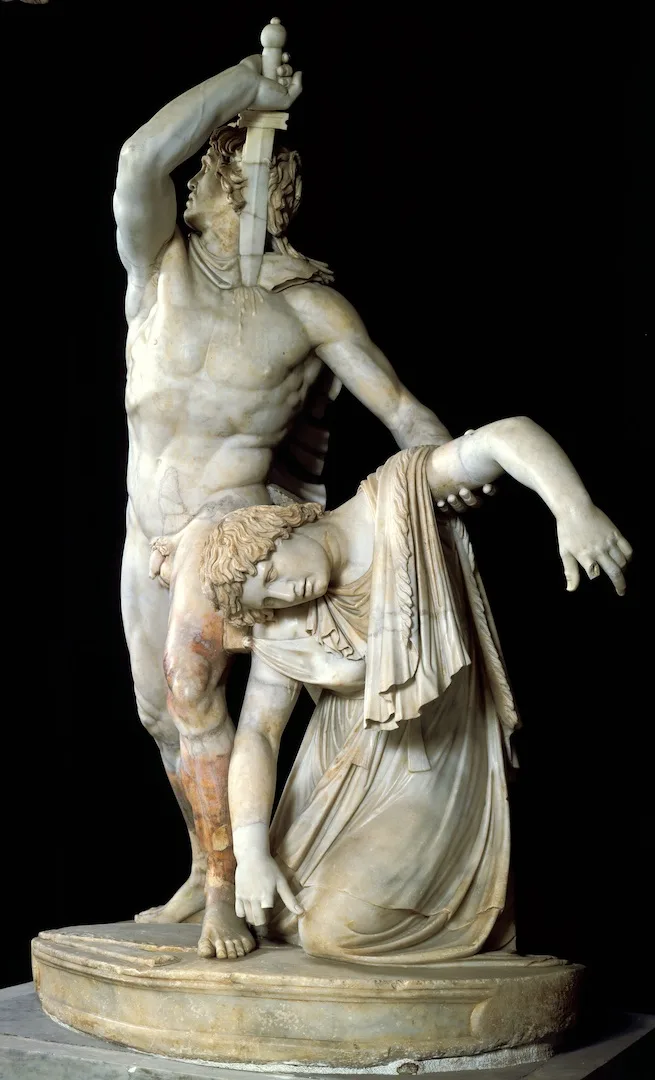
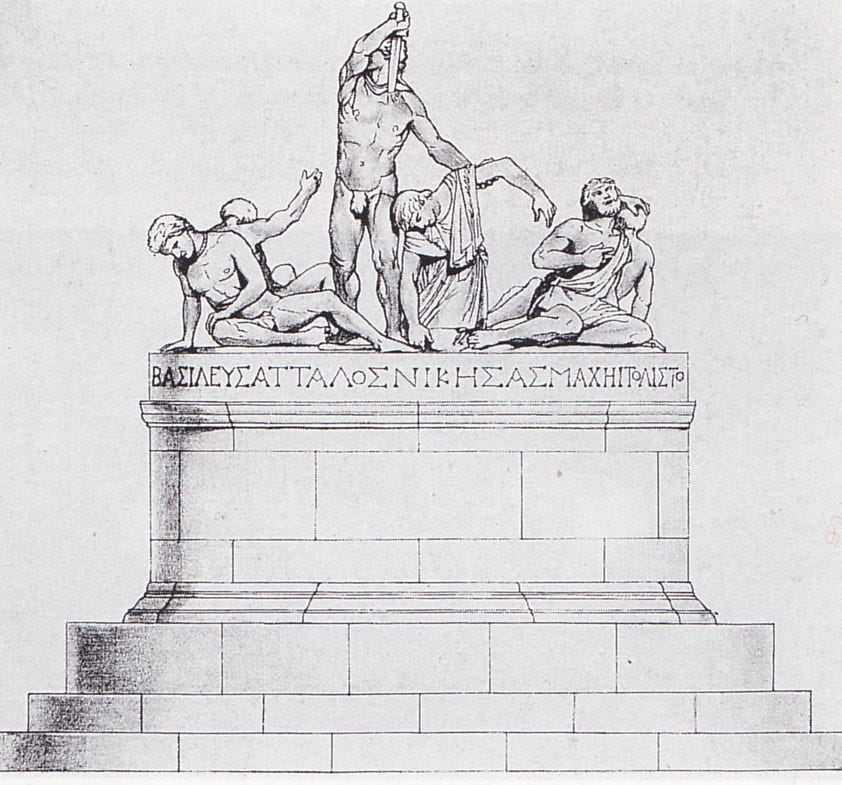
Typical of Hellenistic art, which explored characters and figure types uncommon in the Classical era, the victorious Pergamene general is nowhere to be seen. Instead, the commemorative monument depicted his defeated enemies. The Greeks believed that one’s foes had to be worthy opponents in order to demonstrate Hellenistic power and virtue. Thus, the Celtic trumpeter is shown with dignity and grace as he recognizes that his wounds are mortal.
Migratory tribes had been menacing Asia Minor for several decades prior to their defeat by the Pergamene army in the Battle of the Kaikos River around 238–235 BCE. As my former Professor R.R.R. Smith once said, these European Celts were “culturally and ethnically different from the Greeks, [and] they were not welcome…their warriors terrified the coastal Greek cities,” including Pergamon.5
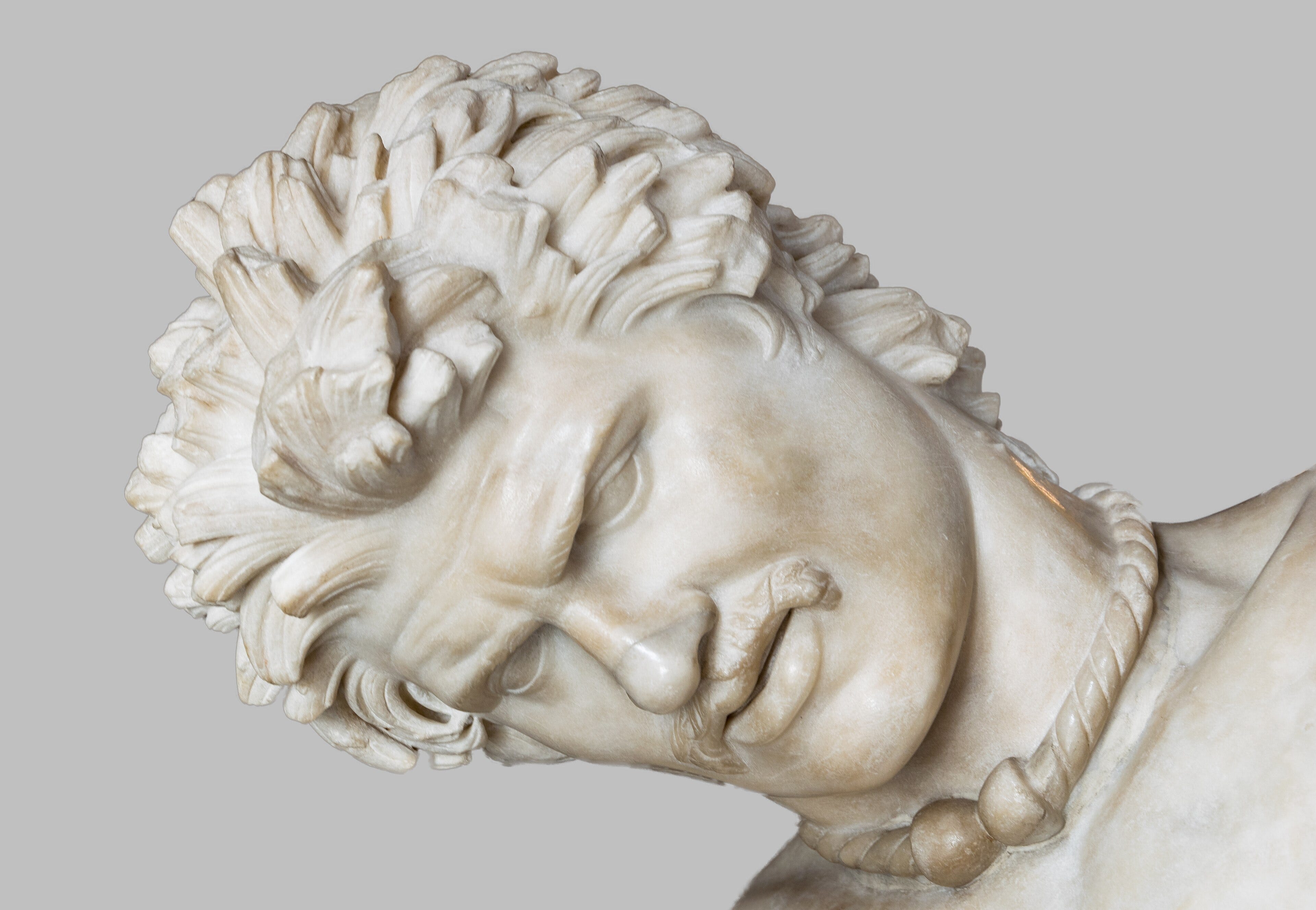
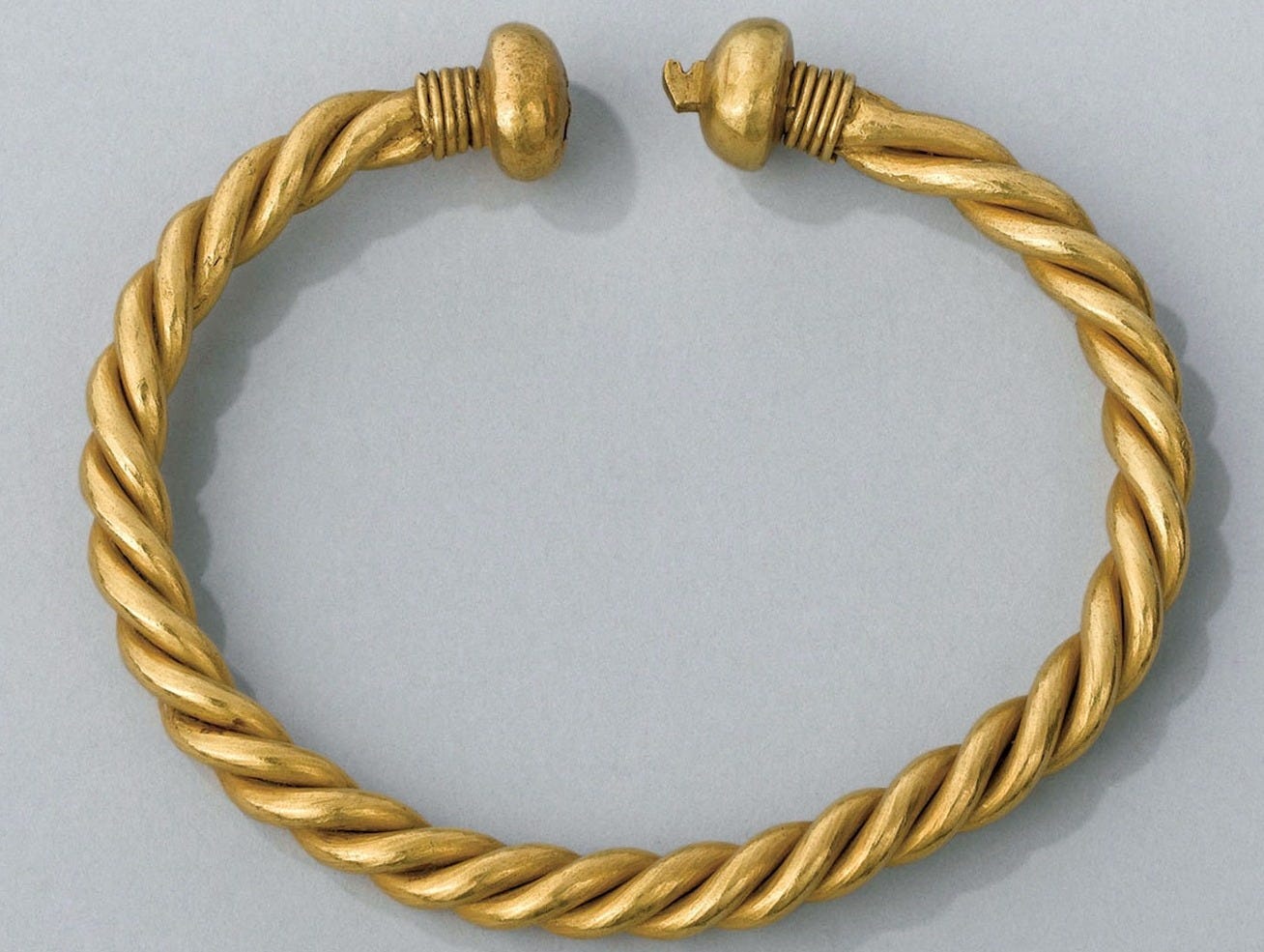
While the warrior has the slender, athletic physique common to ancient Greek statuary, certain details make clear that he is no Hellene. His scruffy wild hair, thick mustache, and neck ring all identify him as foreign, a non-Greek, a ‘barbarian.’
Nevertheless, the artist has sought to inspire both pity and admiration as we watch him struggle to get up, his bulging bicep and forearm no match for his mortal wound. Although ahistorical, I personally like that the trumpeter is isolated in his museum home. This setting allows us to focus on his slow and painful death, his now-useless shield underneath his crumpled body, his trumpet silenced at his feet. (The sword by his right hand is a later addition by the seventeenth-century artist who repaired the statue after its discovery.)
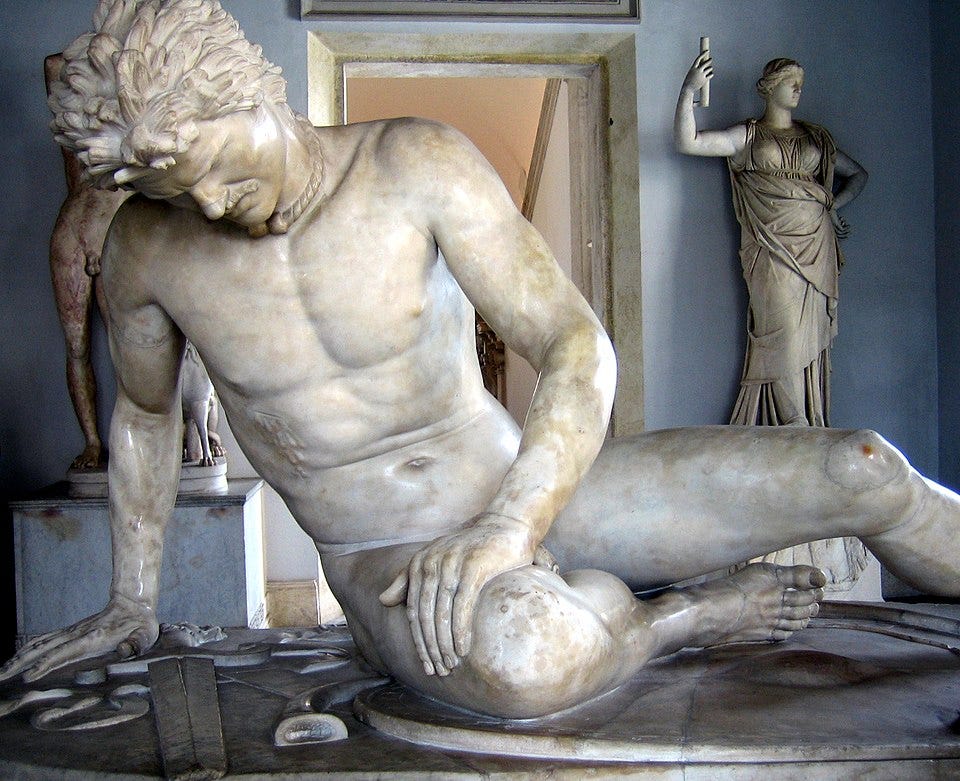

The wound in the trumpeter’s side spurts blood, weakening him to the point of being unable to rise as he braces himself on his right arm. Nevertheless, the figure is contained, resigned to his fate. He does not shout or wail. He simply bows his head.
I want to close with an image that I wish had existed back when my undergraduates asked me “do we have to know this?” I would always say, I don’t know what you are going to need to know, you may find inspiration in any of the things I am teaching you. But, you need to know enough to remember the inspiration and find it again.
A striking adaptation of the Dying Gaul by Kehinde Wiley (b. 1977) takes much of its power from the fact that it is based on a canonical sculpture taught for generations in art history survey classes. Wiley says of his work:
There’s a tradition…that comes from Western Europe. I have spent much of my life learning it and trying to master it….And in a lot of that stuff, I see sadness, but I also see dignity and respect. I see people looking at the life of Christ or the life of a fallen soldier and valuing their lives so much to make really great, beautiful works of art out of it.
I wanted to use that language and turn it towards people who look like me.
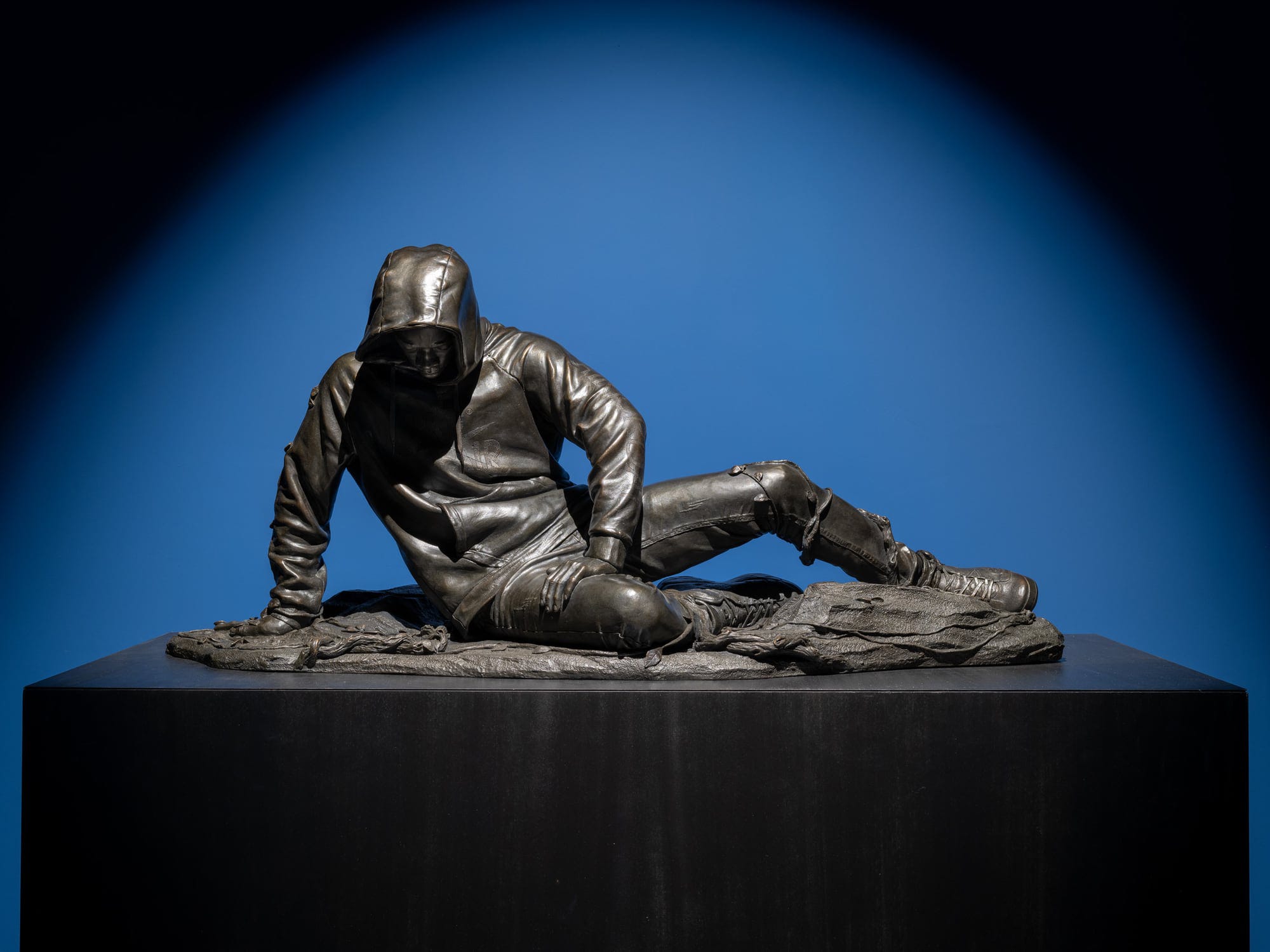
Wiley has literally recast in bronze the Dying Gaul as a young Black man wearing a hoodie, inescapably summoning the tragedy of Trayvon Martin and countless other young people senselessly snuffed out just as their lives were getting started.6 This work was one of twenty-five in Wiley’s solo exhibition “An Archaeology of Silence,” shown in 2023 at the de Young Museum in San Francisco. He discussed it in a compelling interview on the PBS Newshour, the source of the quotations included here.
While art history professors today teach the Dying Gaul with a sensitivity towards its stereotypes and dehumanization of the Celts, it remains an important example of Greek (and Roman) art. For Wiley, the mortally wounded Celt allows him to monumentalize another group of stereotyped, marginalized, forgotten people, “using the language of the epic, the heroic, even the elegiac, the sort of sadness that surrounds a lot of these big monuments, to be able to make someone feel special again, to make someone feel fully formed, mourned after.”7
It is for these sentiments and many more that the Dying Gaul makes my Top 50 list. Would he make yours?
Gaul was the Roman name for the lands corresponding primarily to modern France, but also Belgium, the southern Netherlands, southwestern Germany, and northern Italy whose people were of Celtic origin.
For a reappraisal of this canonical sculpture in light of its inherent othering and stereotyping see Dr. Kimberly Cassibry, "The Dying Gaul, reconsidered," in Smarthistory, May 13, 2023, accessed June 4, 2026, https://smarthistory.org/the-dying-gaul-reconsidered/.
The first Attalos, or Attalus, was king of Pergamon from 241 to 197 BCE. Pergamon was one of many important Greek cities on the coast of Asia Minor, which corresponds to modern-day Turkey.
The so-called Ludovisi Gaul is one of several sculptures collected from 1621 to 1623 by Cardinal Ludovico Ludovisi for his Roman villa. They are now in the Museo Nazionale Romano at Palazzo Altemps.
R. R. R. Smith, Hellenistic Sculpture: a handbook (London: Thames and Hudson, 1991), p. 100.
Trayvon Martin (February 5, 1995 – February 26, 2012) was killed by George Zimmerman as he walked home from purchasing candy at a convenience store in Sanford, Florida. Zimmerman was ultimately acquitted of second-degree murder and manslaughter charges in July 2013, shielded in part by Florida’s “Stand-Your-Ground” law.
Jeffrey Brown, Anne Azzi Davenport, and Lena I. Jackson. “Kehinde Wiley exhibit uses historic icons to expose systemic violence against Black people,” PBS Newshour, originally aired Apr 3, 2023 6:25 PM EDT. Video and transcript accessed 3 June 2026. https://www.pbs.org/newshour/show/kehinde-wiley-exhibit-uses-historic-icons-to-expose-systemic-violence-against-black-people.